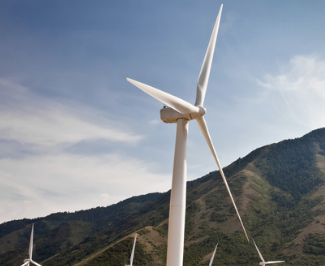


A wind turbine main bearing does one critical job: support 100+ tonnes of rotor weight while accommodating constant rotational stress under variable wind loading. When main bearings fail, the costs are catastrophic R6,000,000 to R8,000,000+ in emergency replacement, extended downtime and cascading damage. Yet these failures are entirely preventable through systematic monitoring and proactive intervention.
The Role and Stress Profile
Main bearings carry radial loads (side forces) and axial loads (thrust) simultaneously. On a 2MW to 3MW turbine, bearing loads change continuously as wind speed and blade pitch angle vary. The bearing must maintain precise tolerance between inner and outer races while accommodating stress that never repeats the same way twice.
Additionally, main bearings operate in harsh thermal environments. Friction generates heat inside the bearing. Wind exposure creates temperature swings. Inadequate cooling accelerates wear. Thermal cycling creates stress that degrades bearing materials over time.

Bearing failures follow predictable stages. Early detection at any stage enables proactive replacement before catastrophic failure occurs.
The most common failure mode is spalling—rolling element surfaces fatigue and chip. As spalling progresses, surfaces become rough, friction increases, heat accelerates wear exponentially. Early spalling detection through vibration analysis can prompt timely replacement before failure becomes catastrophic.
Contamination, lubrication breakdown, corrosion from moisture, and misalignment all accelerate spalling.
A bearing protected through systematic monitoring almost never fails catastrophically.
Monitoring:
Early Warning Systems
Bearing degradation generates detectable signals long before visible failure occurs. The
challenge is distinguishing genuine warning signs from normal operational noise through systematic, expert analysis.
Vibration analysis is primary. Healthy bearings generate characteristic signatures. As surfaces degrade, new vibration components emerge at higher frequencies.
Spectral analysis identifies changes indicating developing wear.
Temperature monitoring supplements vibration. Bearing temperature correlates with internal friction. Gradual increases while operating at constant conditions signal
increasing friction, typically preceding vibration
changes.
Acoustic monitoring detects high-frequency sounds from spalling, appearing long before vibration changes become obvious.
Cost Reality: Proactive vs Reactive
When vibration and temperature monitoring indicate a bearing approaching end of service life, replacement can be scheduled during planned maintenance. This translates to known costs, controlled downtime and no secondary damage. The alternative—unaddressed bearing failure during operation—creates catastrophic cost and operational disruption.
Building the Monitoring Program
Effective bearing monitoring requires systematic approach, not reactive response.
Baseline establishment is foundational. When turbines are new or performing well, capture vibration and temperature signatures as reference. These establish what ‘healthy’ looks like for each turbine, accounting for design differences and operational history.
Trending is essential. Single measurements mean little. Comparing measurements over months reveals whether conditions are stable, degrading slowly or changing rapidly. Bearing condition indices should show either stability or predictable gradual change.
Action thresholds must be pre-defined. At what vibration level should maintenance be
scheduled? At what temperature increase should intervention begin? Pre-defined thresholds remove emotion from decisions and ensure consistent, timely action across the fleet.
Expert interpretation adds critical value. While automated systems collect data, experienced engineers understand what the data means in an operational context. A rapid bearing signature change on 1 turbine warrants a different response than slow, gradual changes across the entire fleet.
The Path Forward: From Monitoring to Confidence
Main bearing failures represent one of the most expensive risks in wind farm operation. Unlike blade erosion, which develops visibly over extended periods, bearing failures can progress rapidly once they begin.
Yet main bearing health is entirely manageable through systematic monitoring. Operators who commit to vibration and temperature monitoring, establish clear decision thresholds, and intervene promptly when warning signs appear can avoid catastrophic failures that create R6,000,000+ repair bills.
The most expensive bearing is not the one that fails catastrophically. It is the one that could have been replaced proactively for a fraction of the cost. The difference between these scenarios is monitoring discipline and willingness to act on data before failure becomes visible.
For wind farm operators serious about asset protection and operational excellence, main bearing monitoring is not optional. It is a foundational strategy that turns a high-risk component into a managed, predictable element of planned maintenance.
About Ikamvalethu Engineering Solutions
Ikamvalethu Engineering Solutions provides comprehensive technical support for wind energy assets, including vibration analysis, bearing diagnostics and condition monitoring services. Our expertise helps operators identify developing component issues before they become critical failures.
For more information about our monitoring and diagnostic services, contact us